Turtle Visit in Moonlight
The famed turtle nesting was a phenomenon we had read about, but witnessing it ourselves seemed like a distant dream. We were keen to see this sensational phenomenon, and now, here we were, in Great Nicobar, with the nesting season underway. Would we be lucky enough to witness it?
For my readers who might be stumbling upon this blog post by chance, I would like to share that I had put up a 5-part series on our voyage to this island back in 2017. You can read about that adventurous journey here.
Anyways, let’s fast forward to December 2025. We were in Great Nicobar, looking for a quiet place to go birding and spend some quality time with nature. We decided to visit one of the beaches in Great Nicobar and sit there the whole night, hoping to witness a turtle emerging from the ocean to lay her eggs.
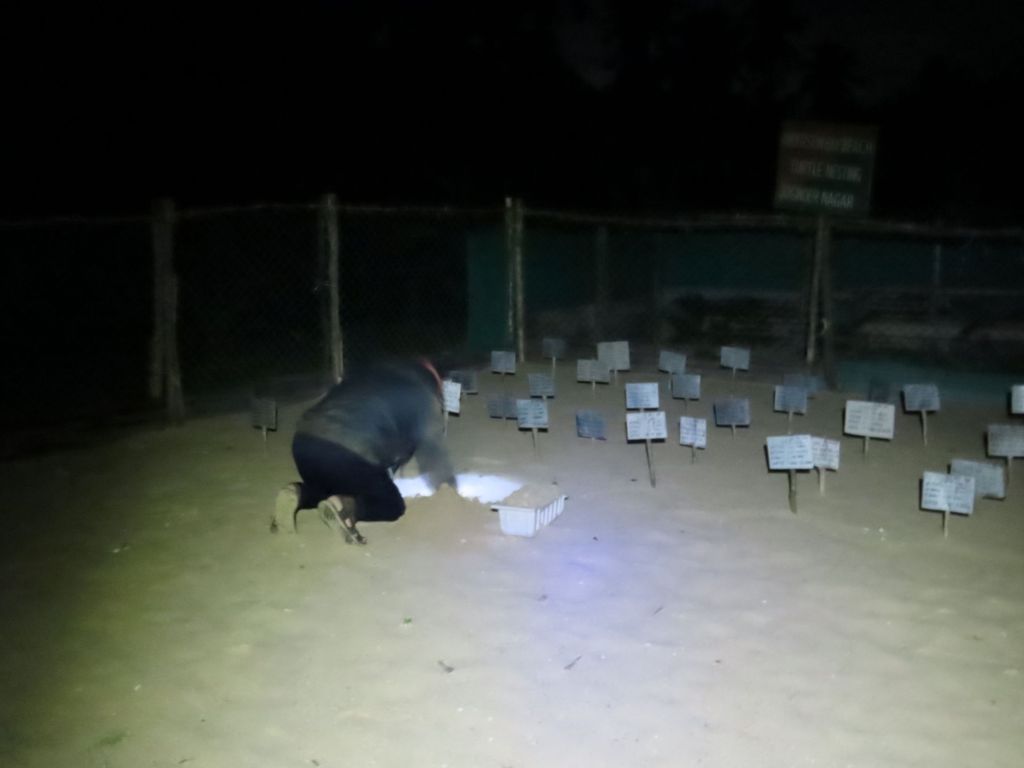
Anyways, our exciting night adventure began at 9:30 pm, post dinner. We rode a scooter to a beach 8 km away and greeted the Forest Department guard who posted there, that night. He was amused by our enthusiasm and warned us that we might not see anything at all. We were, of course, prepared for it. After all, this was nature, and nothing worked on our schedule!
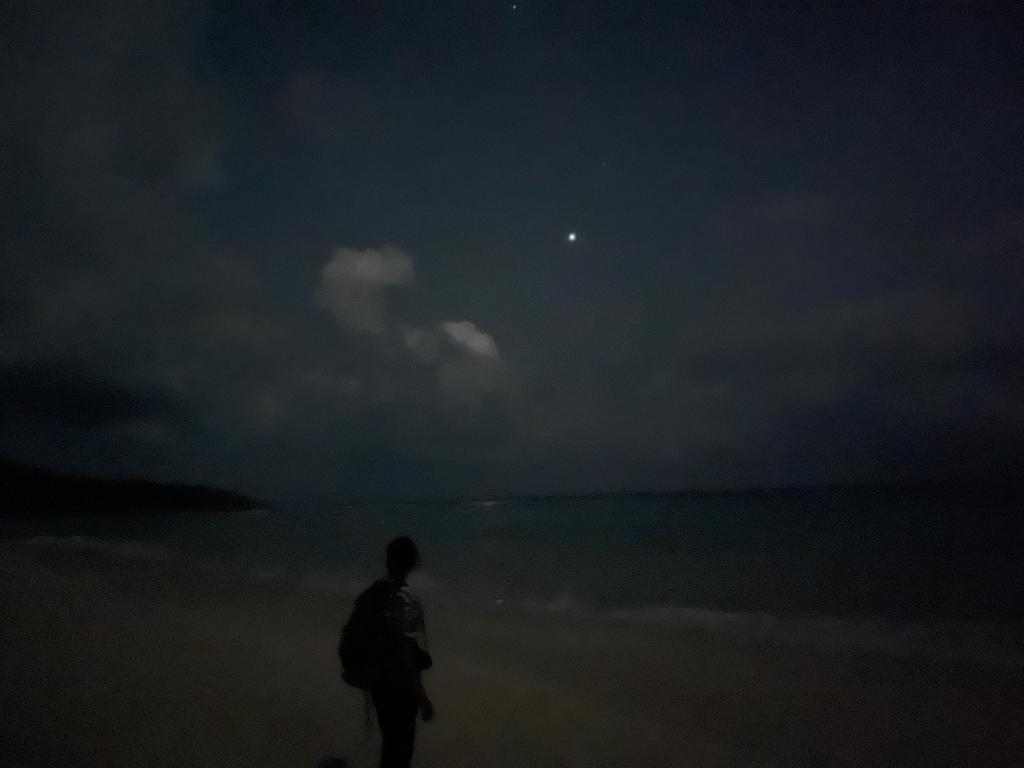
Every hour, we would walk across the whole length of the beach in search of possible turtle visitors. Torchlight was avoided as much as possible, as pointing it towards the ocean apparently deterred the (some) turtles, as the Forest Department guard had told us. So, we walked, scanned the beach, returned to the hut, waited for a while, and then set off again.
Five hours passed, and we fought our body’s sleepiness. The quiet beach and the sound of the waves acted both as a sleep-inducing drug and an insomnia drug! At around 2:45 am, we had just finished another round and come back to sit near the Forest Department hut when Ashwin noticed a dark shape right in front of us, very close to the water.
We had been fooled several times by shifting dark shapes, and the moonlight had tricked us. We would scan the bulges, only to find them to be washed-up logs of wood, sometimes garbage. But this time, the movement looked different!
A turtle had emerged from the water.
Excitement gripped us. All the sleep that was inside us vanished, and we were wide awake.
We remained quiet and patient, for, as ironic as it may seem, the turtle had chosen the very spot we were sitting at as her point of entry along the vast stretch of the beach. Talk about luck!
We made sure not to use any flashlight because we had been warned that, if disturbed, the turtle might turn back halfway through. The moonlight was bright enough to light up the beach in a dim blue hue. We waited patiently as she made her way up the beach. Soon, she was just 10 feet away from us. What luck! It was an olive ridley turtle, quite massive, and may have weighed 60 kg.
The Forest Department guard was vigilant. He had a protocol to follow: he was to wait until the olive ridley dug the area where she finally chose to lay her eggs. For us, every movement was exciting, but the guard knew exactly what to look for. We watched as she slowly moved across the sand, scanning the area from side to side, before finally settling on a spot.
After about 10 minutes, she began digging. It lasted for a few minutes, and then the Forest Department guard knew the moment had come.
5-6 eggs were laid in every go. They kept coming after gaps of few seconds. The eggs were not oval in shape, rather they looked like ping pong (Table Tennis) balls, more spherical. And unlike what I had imagined, the turtle eggs were not hard like chicken eggs. They seemed to have a soft yet leathery outer skin. This was enough for the eggs to not break when the mother turtle lays them on to the sand.
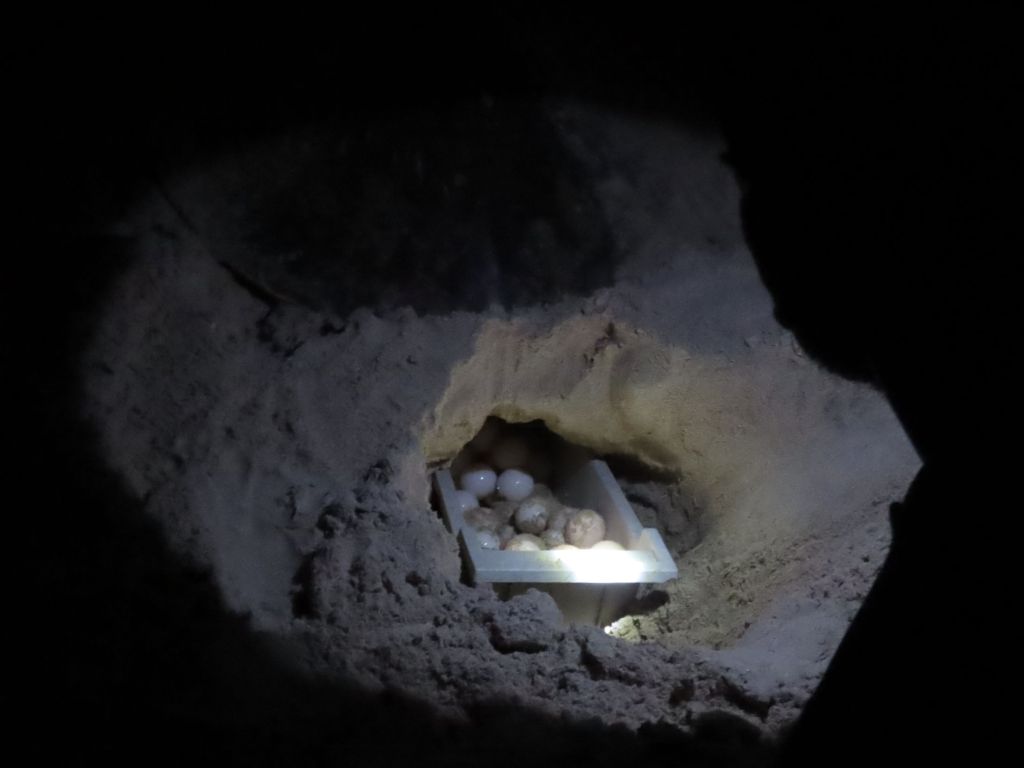
The moment the last egg was laid, the female started covering up the eggs with sand. She then moved around vigorously, patting the sand with her body, as it fell over the eggs. It was fascinating to watch how instinctively she went about the entire process, making sure the eggs were well concealed.
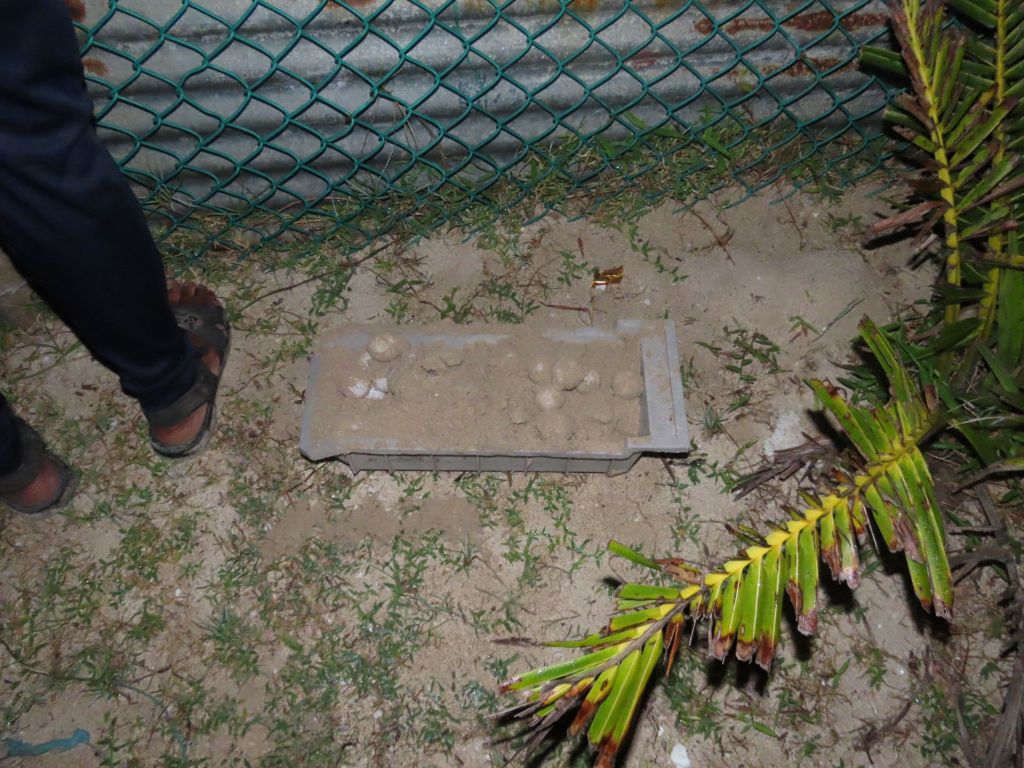
Imagine travelling thousands of kilometres across the ocean, returning to a lonely beach with no people around, under the moonlight, to lay around 100 eggs. Of these, only a fraction may hatch and survive the many dangers that lie ahead, from predators to the harsh realities of ocean life.
For us, though, that night was about something much simpler. It was about sitting on a deserted beach, far away from the rest of the world, and witnessing a small but extraordinary part of nature unfold right in front of us. The quiet, peaceful, moonlit night, with not a single human noise around us, was etched forever in our minds.
Little did we know that this sighting was just a teaser, for two days later, at Galathea Bay, we would witness the same phenomenon all over again, this time involving a massive, 100 kg leatherback female. That was new year’s eve… and a story for another day.
Further Reading
Mongabay-India (2026). A long-distance ocean traveller.
Max Martin (2025). Local participation key in solving turtle nesting riddle. MongaBay.
IUCN Data on Olive Ridley Turtles.
Note: Olive Ridley turtles are a protected species, and conservation protocol was handled entirely by the Forest Department Staff. We were present solely as observers to witness the nesting process, without any direct handling of the turtles or their eggs.
Short Stories Nature Observations andamanandnicobarislands beaches beachesofindia conservation earthlynotes ecotourism egglaying environment forestdepartment greatnicobar indianocean islandecology naturelove natureobservation naturephotography naturewatch oliveridleyturtle reptilesofindia theearthlynotes turtle turtleconservation turtlenesting wildlifeconservation wildlifewatch writing

Earthly Notes View All →
My name is Adithi Muralidhar. I am a nature enthusiast based in Mumbai, India.

